
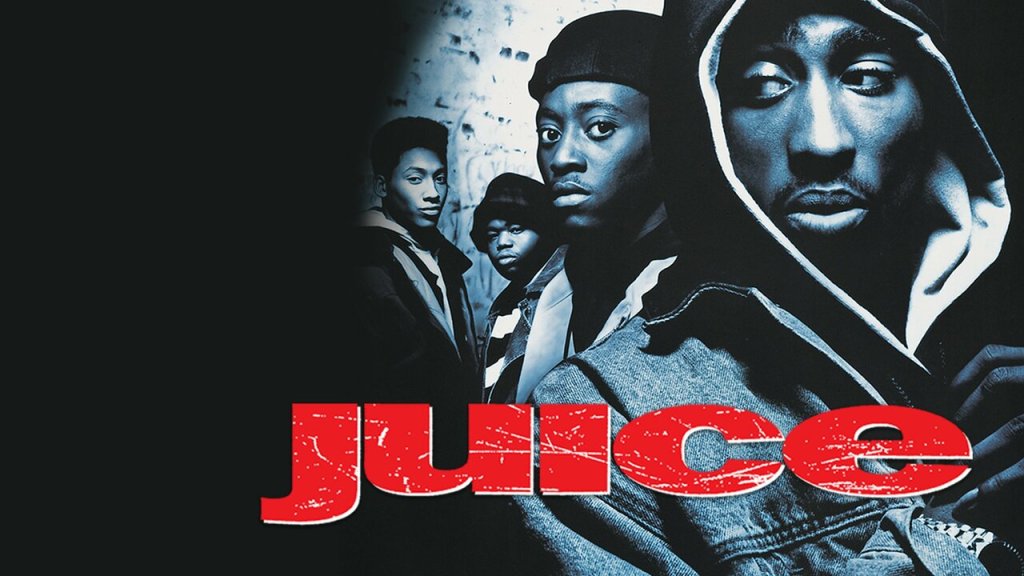
Once upon a time in 1992, I was twelve years old. Hip-hop was fighting to maintain its place in music as gangster rap stole its thunder. Tupac Shakur was alive, well, and had recently departing from the super hip-hop group Digital Underground to embark on a solo career that would change his life trajectory. Oh, and Spike Lee’s mainstay cinematographer Ernest Dickerson decided to get from behind the lens and direct. During the bubble, boil, and hip-hop troubles, somehow the world was blessed with Juice, a gritty, non-compromised sketch of cinematic crime fiction highly influenced with an ambiance hip-hop symmetry.
For better or worse, Juice is a teenage cult classic, though rarely given the honor and distinction due to his mature subject matter and America’s obsession with ignoring the realities of its less fortunate in the urban jungle. The film explores the hopes and dreams of the teenaged ‘Wrecking Crew’, a group of four young guys growing up in the bowels of Harlem trying to survive the temptations the street offers them in exchange for their lives.
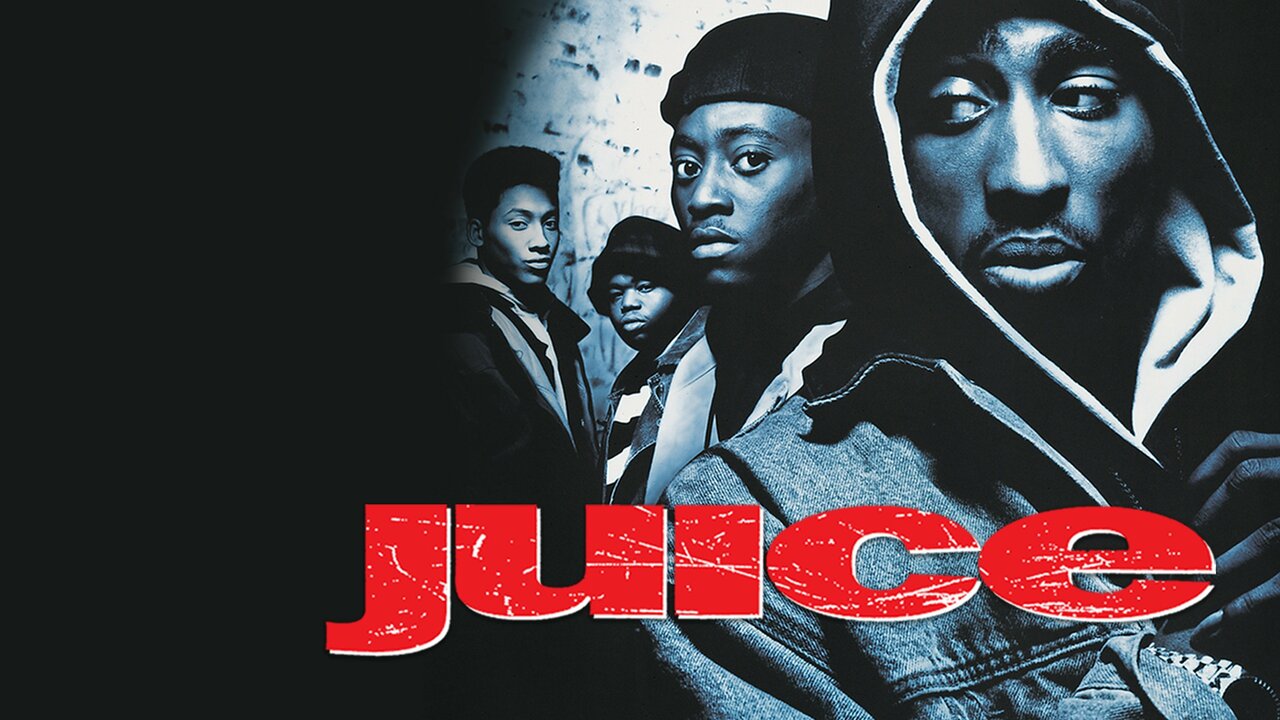
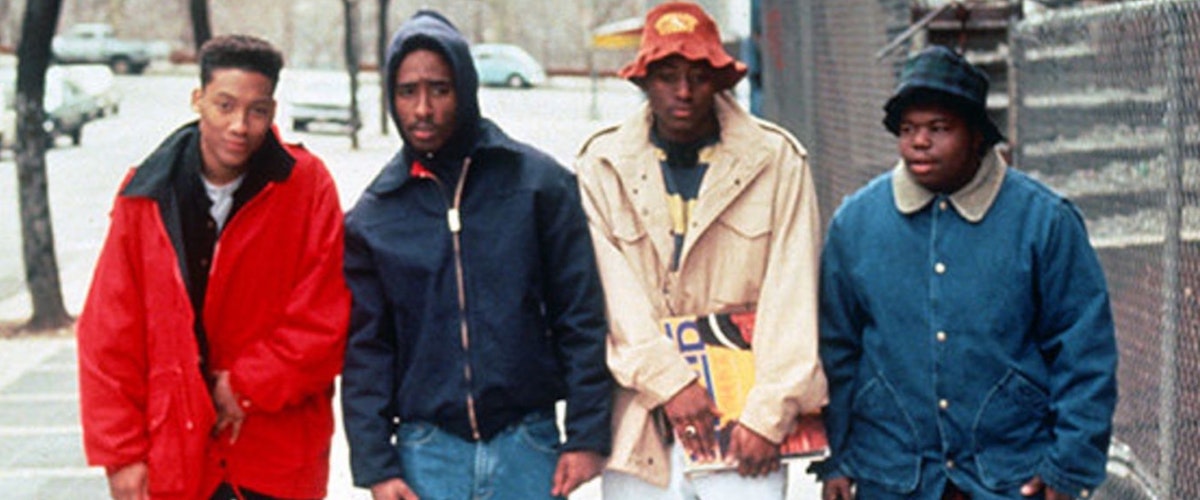
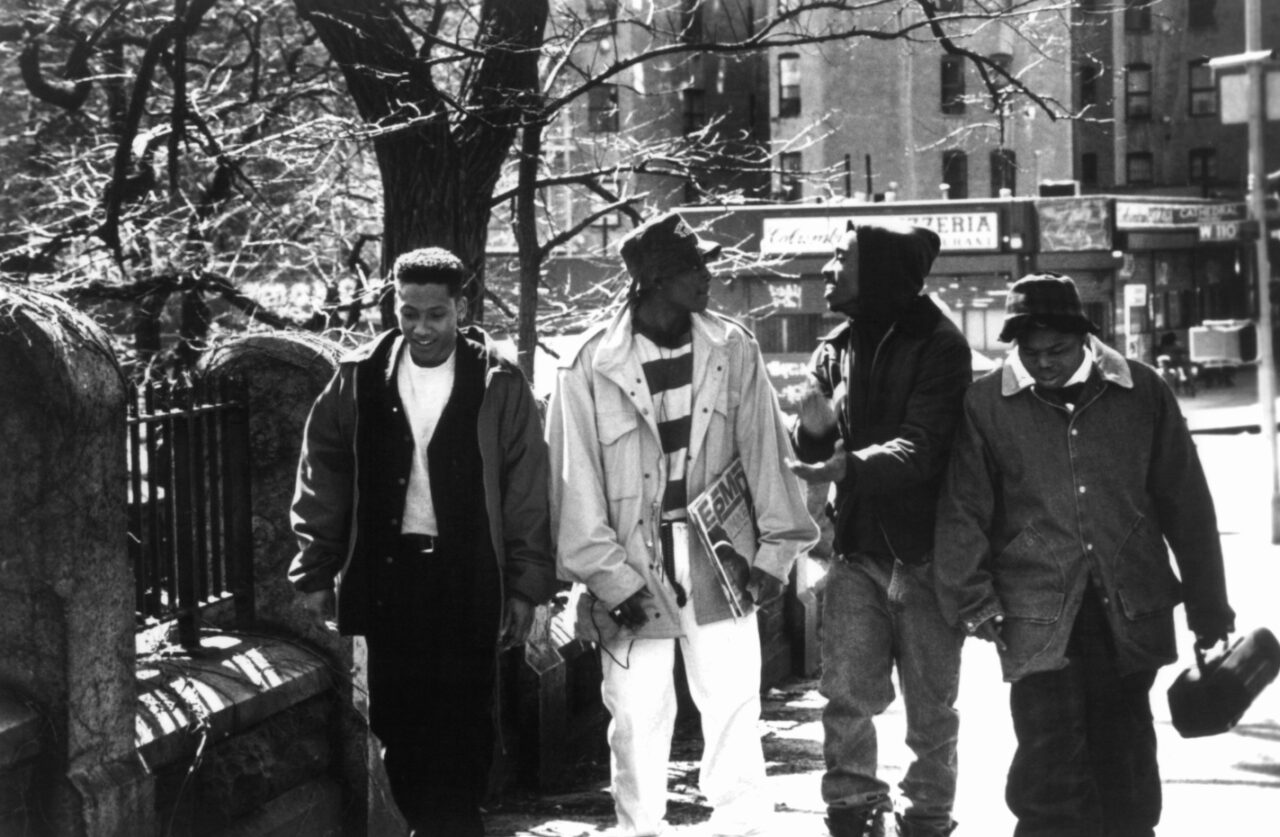
Gee-Q (Omar Epps) is the creative one of the bunch, an aspiring DJ who wants to mix scratch his way to a music career against his mother’s wishes that he become a trade school laborer. Raheem (Khalil Khan) is the peacemaker leader of Wrecking Crew and certified pretty boy who battles his ego dealing with having a child and no money to support it. Steel (Jermaine Hopkins) is the loveable goofball that catches the brunt of verbal and later physical abuse of his friends, who goes along to get along. Bishop (Tupac Shakur) constantly tries to be a tough guy in the street, hell bent on a criminal path that brings in enough money to take care of his family but settles on simple blood lust until he burns out.
While on the surface the Wrecking Crew seems to have a brotherly type camaraderie during their harmless hustling at the arcade selling mixtapes, cigarettes, and gambling on video games, their individual aspirations and increasing financial woes splinter the group in different directions. After a felonious act in the middle of Gee-Q’s DJ battle, the Wrecking Crew dynamic is changed forever in a series of chain reactions that leaves its members fighting to survive their own self-engaged destruction so the last man standing can have the rep in the street he had all the Juice.
Unlike most urban dramas that feature hip-hop, Juice is saturated and oozed into hip-hop, with even New Jack Swing covering the few vocal performances by Aaron Hall, Teddy Riley featuring Tammy Lucas, and the Brand New Heavies featuring N’dea Davenport. Led by Hank Shockless and the Bomb Squad, Juice is bombastically launched by the Eric B. and Rakim title track, which sets the tone of the film in one of the most memorable and vivid opening credit sequences that has ever been done in film. It also is a nice double entendre for the ending if you’re paying attention.
Songs are characters in Juice; the are the silent fifth member of the Wrecking Crew that brings the tension, action, and climax into fruition. How they are parceled out sets the stage and tone for what is and what is to come; New Jack Swing songs are used exclusively in the interpersonal relationships the Wrecking Crew has with women they are interested in like the wingman they didn’t know they needed to help them get the digits. The scenes with Gee-Q and his girlfriend or Gee-Q in the record store are prime examples. On the flip side of the coin, the Wrecking Crew’s rise and fall are exclusively fist pumped into reality by the grittiest collage of hip-hop songs of its time that speak to their existence yet give us subtle hints into the future of our fabulous four.
When the Wrecking Crew cuts school, Naughty By Nature’s Uptown Anthem tells us of their boyish lightheaded nature as they innocently walk down the street having fun. When Raheem sees his ex-girlfriend taking off in the car of a dope dealer after scolding him of his lack of finances to help with his kid, Salt-N-Pepa’s Gamin’ On Ya and Sons of Baezerk’s What Could Be Better Bitch give just the right edge of Raheem’s desperation without making him look pathetic. EMPD’s It’s Going Down is the perfect chase scene ambiance in both lyrics and music, portraying perfectly the fear in one character and the terror like pride in another. The feather in the film’s cap are the songs surrounded Bishop’s descent into madness. Big Daddy Kane’s Nuff Respect and Cypress Hill’s How Could I Just Kill A Man and Shoot Em’ Up are the perfect psychological study of an unraveling character to his breaking point and beyond.
Juice is not a hip-hop musical. It’s a dope film with a hardcore hip-hop soundtrack.
Unlike it’s hip-hop contemporaries such as House Party, Krush Groove, Breakin’ and Beat Street, Juice is in a hip-hop class by itself; it’s as hardcore hip-hop as you can get, but it isn’t a pleasure listening to the album by itself – it really doesn’t work without the film and vice versa. Don’t get it twisted, Juice is not, nor ever will be, a hip-hop film in the truest sense of the word like House Party. Hip-hop just is the musical medium to help tell the story if that makes sense. This ain’t Who’s the Man, Belly, or New Jersey Drive where it is blatant that the film is there as a vehicle of hip-hop. Juice is an urban noir, and hip-hop brings a juxtaposition to that dynamic (see the scene with Bishop watching White Heat, which is equal to the scene in Easy Rider where Captain America and Wyatt fix their motorcycle tire while the guy behind them reshoes a horse). It’s soundtrack is ethereal, and makes for quite the cinematic experience that, over thirty years later, is memorable. Sadly, it’s the only film that has done this since its release.
So for all you squares not in the know, go watch the film and listen to its soundtrack and experience the hip-hop business its standing on.
“J. Period Brings The Isley Brothers To Hip Hop” an article by Tia Ja’nae from ARTICULATE MADNESS. Images are in the public domain and researched by by ART | library deco editorial staff. Album Cover & Mixtape Provided by J. Period Presents Best of The Isley Brothers: Remixed, Courtesy of Artist Website; The Isley Brothers Cover Image in the Public Domain.


Share Your Feedback with ART | library deco!